SNOWPEAK has developed a special type of 3A molecular sieve, which applies to natural gas drying or olefin dehydration processes. This 3A molecular sieve has successfully served several large-scale natural gas processing projects, and has withstood the rigorous tests of high temperature, heavy load, and long-term operation.
Core Challenges Of Natural Gas Drying And Olefin Dehydration
Before cryogenic separation, petroleum cracking gas must be deeply dehydrated to below 1 ppm; otherwise, residual moisture will form hydrates or ice crystals at low temperatures, clogging cold boxes and pipelines, leading to unit shutdown. For high-end natural gas processing scenarios such as LNG, the water content requirement is even more stringent, requiring dehydration to 0.1 ppm to prevent damage to equipment from even the smallest ice crystals.
However, the core challenge in natural gas and olefin drying lies not only in “water absorption” but also in “how to avoid hydrocarbon absorption.” Ordinary desiccants, while adsorbing moisture, often co-adsorb heavy hydrocarbon molecules such as ethane and propane, leading to:
- Hydrocarbon loss: Valuable hydrocarbon components are adsorbed and lost;
- "Coking" Failure: Heavy hydrocarbons condense and coke at high regeneration temperatures, clogging pores and causing irreversible deactivation of the adsorbent;
- Regeneration difficulty: Co-adsorbed hydrocarbons are difficult to completely desorb, shortening the adsorbent's lifespan.
Olefin dehydration is a key process in petrochemical or natural gas industries. Its main purpose is to remove moisture from olefins such as ethylene, propylene, and butene, preventing equipment corrosion, catalyst poisoning, side reactions, and icing in cryogenic units. Therefore, the 3A molecular sieves used are not simply “ordinary 3A” but rather specialized products with precise pore-size control and high selectivity.
Difference Between Ordinary 3A And Special 3A Molecular Sieves
Also as “3A molecular sieves”, the products may exhibit significant differences in terms of pore size uniformity, ion exchange capacity, and adsorption selectivity. The following are the main differences between ordinary 3A and special 3A molecular sieves:
| Item | Special 3A | Ordinary 3A |
|---|---|---|
| Design Positioning | Specifically designed for hydrocarbon-rich conditions such as natural gas, oilfield gas, and refinery gas | Suitable for general drying |
| Pore Size Accuracy | Strictly controlled within 3.0-3.3Å for precise sieving | Pore size distribution range is relatively wide, some channels may be >3.3Å |
| Hydrocarbon Adsorption | Almost no adsorption of hydrocarbon molecules such as methane and ethane, avoiding co-adsorption contamination | Due to inaccurate pore size control, some small molecule hydrocarbons may be adsorbed, leading to "hydrocarbon poisoning" |
| Contamination Resistance | Strong! Tolerant to coexisting impurities such as thiols, carbon dioxide, adsorption performance decays slowly | Weak! Regeneration is difficult after impurity co-adsorption, and adsorption capacity decreases rapidly |
| Typical Applications | Natural gas dehydration, LNG pretreatment, and pyrolysis gas drying | Insulating glass air drying, refrigerant drying, and dehydration of polar liquids |
Application Advantages Of SNOWPEAK Special 3A Molecular Sieve
SNOWPEAK focuses on the research and production of zeolite molecular sieves, drives product upgrades through technological innovation. This special 3A molecular sieve boasts superior performance and stable quality, which is dedicated to the global petrochemical, natural gas deep processing, and cryogenic air separation industries.
- Large-scale Project Cases
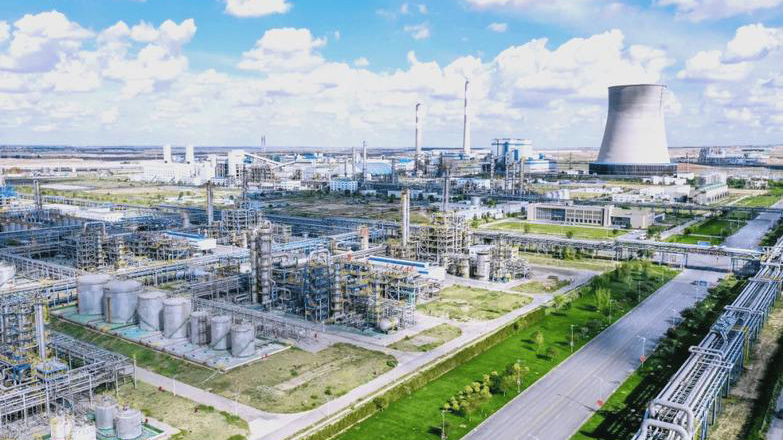
SNOWPEAK’s special 3A molecular sieves have been successfully used in several large-scale natural gas dehydration projects, with single supply volumes exceeding 100 tons. These molecular sieves have operated continuously for over 24 months, with consistently compliant outlet dew points.
Customer feedback indicates that the strength and service life of the special 3A molecular sieves meet design requirements, offering a significant cost-performance advantage. And SNOWPEAK has established long-term and stable cooperative relationships with relevant companies in the Middle East.
- Mature Application Scenarios
LNG pretreatment dehydration to 0.1 ppm, to prevent freezing in cryogenic heat exchangers.
Olefin cracking gas dehydration to 1 ppm, to prevent blockage in cryogenic separation cold boxes.
Natural gas long-distance pipeline drying, to prevent hydrate formation and ensure safe gas transmission.
- Global Service Network
SNOWPEAK has established a global product supply and technical service network covering the Middle East, Southeast Asia, Europe, and the Americas, applicable to various adsorption, drying, and catalytic processes.



 IT
IT  EN
EN  RU
RU  ES
ES  AR
AR  PT
PT  DE
DE